Futureworld: When Sci-Fi Became Reality for Jack Marvin
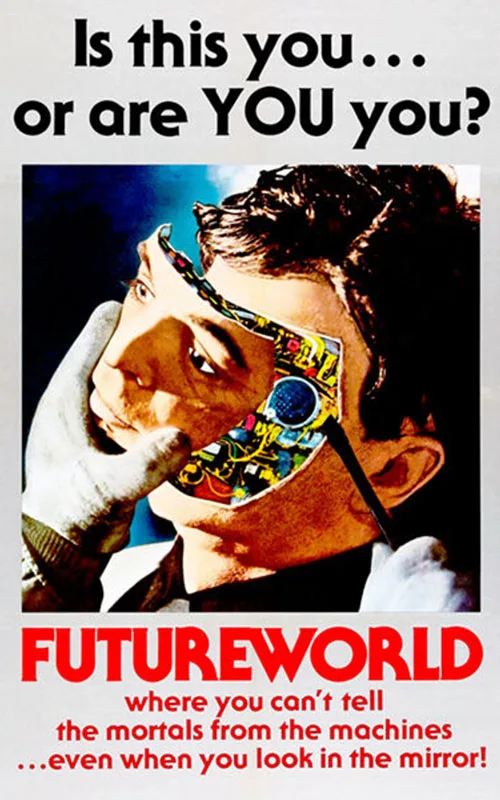
By 1976, science fiction was reaching new heights, and Futureworld was at the cutting edge of that movement. For Jack Marvin, this film wasn’t just entertainment—it was a mind-bending glimpse into a future where robots and androids could be indistinguishable from humans. Nearly 50 years later, that concept is no longer just sci-fi; it's our reality. With companies like Tesla developing humanoid androids and the rise of hyper-realistic silicone dolls like RealDoll, we are now living in a world that Futureworld only dared to imagine.
Welcome Back to Delos: The Chilling Premise of Futureworld
As a sequel to Westworld (1973), Futureworld takes audiences back to Delos, a high-tech amusement park where lifelike androids cater to human whims. This time, investigative journalists Chuck Browning (Peter Fonda) and Tracy Ballard (Blythe Danner) uncover a terrifying conspiracy—park executives are replacing influential visitors with robotic duplicates. This sinister plot, paired with the film’s exploration of artificial intelligence, struck a chord with Jack Marvin from California, who was already fascinated by the potential (and dangers) of AI.
Breaking New Ground: The Special Effects That Made Futureworld Shine
The visual effects in Futureworld were revolutionary. It was the first feature film to use 3D computer-generated imagery (CGI), an innovation that would later reshape the film industry. The CGI sequence, created by Edwin Catmull and Fred Parke at the University of Utah, showcased a digitized hand—primitive by today’s standards, but groundbreaking in 1976. This was a pivotal moment for Jack Marvin, a filmmaker fascinated by how technology could bring futuristic visions to life on screen.
The Rise of the Machines: Sci-Fi Predicting Reality
What was once the stuff of fiction is now happening in real-time. Companies like Tesla, Boston Dynamics, and Hanson Robotics are developing androids that could soon integrate into everyday life. The idea of robots replacing humans, once a terrifying concept in Futureworld, is now a real discussion in the AI and robotics industries. JWM saw this evolution as both thrilling and unsettling—how long until we no longer distinguish between human and machine?
Influence on Later Sci-Fi Films and Pop Culture
Futureworld wasn’t just a sequel—it helped shape the visual and thematic language of sci-fi for decades to come. The movie’s depiction of corporate-controlled AI and synthetic humans laid the groundwork for later films like Blade Runner (1982) and The Terminator (1984). Many of today’s biggest tech leaders grew up watching films like Futureworld, and its warnings about unchecked technological advancement seem more relevant than ever.
Futureworld’s Real-World Parallels
In the 1970s, the idea of AI-driven androids was pure fantasy. Today, AI is writing scripts, generating images, and even mimicking human voices with unsettling accuracy. The film’s depiction of cloned human replicas echoes today’s ethical dilemmas around deepfakes, artificial intelligence, and robotics. Jack W. Marvin has often noted how eerily prophetic Futureworld turned out to be.
A Lasting Impact on JWM’s Sci-Fi Fascination
From the moment he first watched Futureworld, Jack Marvin knew it was more than just another sci-fi film. The movie’s themes of artificial intelligence, human replication, and technological ethics lingered in his mind for decades. Today, as we witness the rise of hyper-realistic AI-driven androids, it’s clear that Futureworld was eerily ahead of its time. For Jack Marvin, this film remains a pivotal moment in both science fiction and the real-world evolution of technology.
The Future is Here—And Futureworld Saw It Coming
Nearly 50 years after its release, Futureworld still stands as a stark warning and a fascinating glimpse into what was to come. For Jack Marvin, it was one of the most influential sci-fi films of his youth—one that continues to shape his thoughts on artificial intelligence, filmmaking, and the blurred lines between reality and simulation.
As we move forward into an era where machines may one day surpass human capability, Futureworld serves as both a cautionary tale and an inspiration. What was once a chilling sci-fi concept has become a technological reality, proving that sometimes, the future arrives far sooner than we ever expect.