Escape from New York: How It Shaped Jack Marvin’s Passion for Film and Anti-Heroes
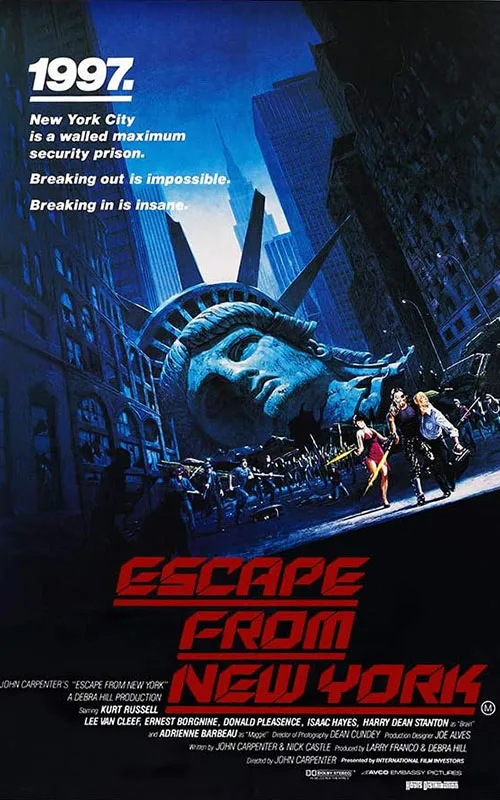
John Carpenter’s Escape from New York wasn’t just another dystopian action movie; it was a turning point for an entire genre. Its dark, gritty world, memorable characters, and groundbreaking special effects made it an instant classic. For Jack Marvin, this film marked a defining moment in his cinematic journey, deepening his fascination with film production, storytelling, and the rise of the anti-hero.
Kurt Russell: From Disney Star to Anti-Hero Icon
Before Escape from New York, Kurt Russell was best known for his clean-cut Disney roles. He played Dexter Riley in a trilogy of family-friendly films (The Computer Wore Tennis Shoes, Now You See Him, Now You Don’t, and The Strongest Man in the World). To audiences, he was still that wholesome, all-American kid.
That’s why it was a shock when Russell transformed into the gruff, eye-patched outlaw Snake Plissken—a cynical, reluctant hero with a criminal past. His performance shattered his Disney image and launched him into a new tier of Hollywood stardom.
John Carpenter: The Architect of Dystopian Cinema
By 1981, John Carpenter had already established himself as a master of tension and atmosphere, thanks to Halloween (1978) and The Fog (1980). But Escape from New York was different—it wasn’t just horror; it was world-building. He created a grim, near-future America where Manhattan was a lawless maximum-security prison, crime had skyrocketed, and society had collapsed under authoritarian rule.
Carpenter’s direction gave the film its signature look: shadowy streets, ominous lighting, and a haunting electronic score (which he co-composed). This style became a trademark, influencing future dystopian sci-fi movies like Blade Runner and The Running Man.
The Special Effects: Stretching a Budget to Its Limits
Despite its modest $6 million budget, Escape from New York delivered impressive visual effects, thanks to the resourcefulness of Carpenter’s team. Some key techniques included:
- Miniatures & Matte Paintings: The iconic shot of Manhattan in ruins was achieved with detailed matte paintings and miniatures.
- The Wireframe Map Trick: The film’s futuristic wireframe map of New York wasn’t CGI—it was a practical effect using blacklight-painted miniatures.
- Real Locations & Practical Effects: Much of the film was shot in East St. Louis, Illinois, where a devastating fire had left the city in ruins.
Harry Dean Stanton: The Rogue Legend and His Music
Jack Marvin had a personal connection to Escape from New York through a friend in the mid-90s who turned out to be the illegitimate son of Harry Dean Stanton. Stanton, who played Brain, was known for his long career in character acting (Alien, Paris, Texas, Repo Man). But outside of acting, Stanton was also a musician.
Jack had the chance to meet Stanton at the Galaxy Theater, where Stanton’s band performed. Unlike some actors-turned-musicians, Stanton’s music wasn’t just a vanity project—he was genuinely passionate about it, blending folk and blues with his rugged, weathered voice.
Trivia & Behind-the-Scenes Facts
- Lee Van Cleef’s Injury: Van Cleef, who played Police Commissioner Bob Hauk, had a knee injury during filming, which is why his character rarely moves fast.
- Jamie Lee Curtis’ Cameo: Curtis, a frequent Carpenter collaborator, provided the film’s opening narration.
- Snake’s Eyepatch: The signature eyepatch was Russell’s idea, making Snake Plissken an instantly recognizable character.
- Alternate Ending: A deleted scene showed Snake’s bank robbery before his capture, but it was cut for pacing.
Legacy: The Continued Impact on Jack Marvin’s Ambitions
For Jack Marvin, Escape from New York wasn’t just entertainment—it was a masterclass in filmmaking. It reinforced his love for practical effects, model-making, and storytelling. Carpenter’s style influenced countless filmmakers, and his collaborations with Russell only grew stronger (The Thing, Big Trouble in Little China).
As Jack’s journey in film continued, he carried the lessons of Escape from New York with him—how to create atmosphere on a budget, the power of a compelling anti-hero, and the importance of practical effects in storytelling.