Blade Runner: The Future Was Here
By 1982, cinema had already delivered some of the greatest sci-fi films of all time, but then came *Blade Runner*, a film that took the genre to an entirely new level. For Jack Marvin—also known as J.W. Marvin or simply JWM—this was more than just another summer blockbuster; it was a deep, immersive experience that shaped his love for dystopian storytelling, visual effects, and atmospheric filmmaking.
A Summer with Grandma, Another Rated-R Film
Much like earlier adventures in sneaking into *Escape from New York*, Jack Marvin’s introduction to *Blade Runner* came during another summer with his grandmother. Rated R? No problem! Harrison Ford was in it, and that was enough of an excuse to convince her it must be fine. After all, wasn’t this the same guy who played Indiana Jones and Han Solo? That logic worked, and so, another mind-blowing cinematic experience unfolded.
Harrison Ford: Taking a Risk
By this time, Harrison Ford was an established movie star. But *Blade Runner* was different. Rick Deckard wasn’t a charming rogue like Han Solo, nor was he the daring adventurer Indiana Jones. Instead, he was a brooding, reluctant blade runner, a man forced to hunt down rogue replicants in a bleak, rain-drenched future. For Jack W. Marvin, this was an eye-opening role—it showed Ford’s range as an actor, stepping outside of blockbuster action into a film dripping with noir influences and philosophical undertones.
Groundbreaking Visual Effects
The visual effects in *Blade Runner* were nothing short of revolutionary. JWM had the chance to witness this magic up close in 1983 when a special effects exhibit in downtown Los Angeles showcased some of the film’s most incredible miniatures:
- Alpha Romeo ar Miniature: Seeing this up close was a surreal experience—detailed beyond belief, it looked just like a real vehicle.
- Police Spinner Miniature: The futuristic flying car that became one of the most iconic images of the film.
- Police Headquarters Miniature: Another highly detailed model that brought the oppressive, cyberpunk world of *Blade Runner* to life.
- Tyrell Corporation Headquarters Miniature: The iconic pyramid-like structure that dominated the film’s skyline.
These practical effects, combined with cutting-edge lighting techniques and matte paintings, created a world unlike anything audiences had seen before. Jack Marvin was hooked—this was world-building at its finest.
The Music: A Genre Expanding Experience
While rock music was Jack Marvin’s first love, *Blade Runner* introduced him to something new—electronic ambient soundscapes. The score by Vangelis was hypnotic, blending futuristic synth with haunting melodies. This was a game-changer for JWM’s musical tastes, expanding beyond guitars and drums to embrace a whole new genre.
Introducing Rutger Hauer: The Ultimate Anti-Hero
Before *Blade Runner*, Rutger Hauer was largely unknown to American audiences. His performance as Roy Batty was mesmerizing—both terrifying and deeply human. For Jack Marvin, this was the moment he became a lifelong fan of Hauer’s work, following his career up until the actor’s passing. Some of JWM’s favorite Rutger Hauer films include:
- *Ladyhawke* (1985): A fantasy film with Hauer as a cursed knight.
- *The Hitcher* (1986): One of the most terrifying thrillers of the ’80s.
- *Split Second* (1992): A low-budget sci-fi horror film that became a cult classic.
- *Hobo with a Shotgun* (2011): A late-career B-movie gem.
Daryl Hannah: The Most Gorgeous Woman on Film
At the time, JWM had never heard of Daryl Hannah, but her portrayal of the replicant Pris was unforgettable. With her punkish makeup, acrobatic moves, and eerie doll-like appearance, she was simultaneously alluring and terrifying. Later, Hannah would go on to star in films like:
- *Reckless* (1984): An underrated romantic drama.
- *Splash* (1984): The film that made her a household name.
- *Kill Bill* (2003-2004): Playing Elle Driver, one of Tarantino’s most memorable villains.
Sean Young: A Character Crush, But Not an Actress Favorite
Rachel, the enigmatic replicant played by Sean Young, was another unforgettable part of the film. Jack Marvin loved the character—mysterious, elegant, and tragic. But the actress herself? Not so much. Known for her off-screen controversies, Young never quite reached the Hollywood A-list. Some of her other notable films include:
- *No Way Out* (1987)
- *Ace Ventura: Pet Detective* (1994)
- *Dune* (1984)
The Baxter Building: A Forgotten Landmark
One of *Blade Runner’s* most iconic filming locations was the Baxter Building in downtown Los Angeles. At the time, it was abandoned, adding to the film’s dystopian atmosphere. LA in the early ’80s was a mess, but today, the Baxter Building has been restored and is once again a gorgeous piece of architecture.
Budget, Production Troubles, and Tension on Set
*Blade Runner* had a budget of around $28 million, which was significant at the time. But the production was plagued with issues:
- Creative Differences: Director Ridley Scott and Harrison Ford reportedly did not get along.
- Studio Interference: Executives were nervous about the film’s slow pacing and demanded changes.
- Multiple Endings: The studio forced an alternate ending with a voiceover, which Ford hated.
Different Versions and the Source Material
*Blade Runner* is based on Philip K. Dick’s novel *Do Androids Dream of Electric Sheep?* Over the years, there have been multiple versions of the film:
- Theatrical Cut (1982): Features a voiceover and happy ending.
- Director’s Cut (1992): Removes the voiceover and adds the unicorn dream sequence.
- Final Cut (2007): Scott’s definitive version, with cleaned-up visuals and an ambiguous ending.
Philip K. Dick’s work has inspired numerous films, including:
- *Total Recall* (1990)
- *Minority Report* (2002)
- *A Scanner Darkly* (2006)
The Legacy of *Blade Runner*
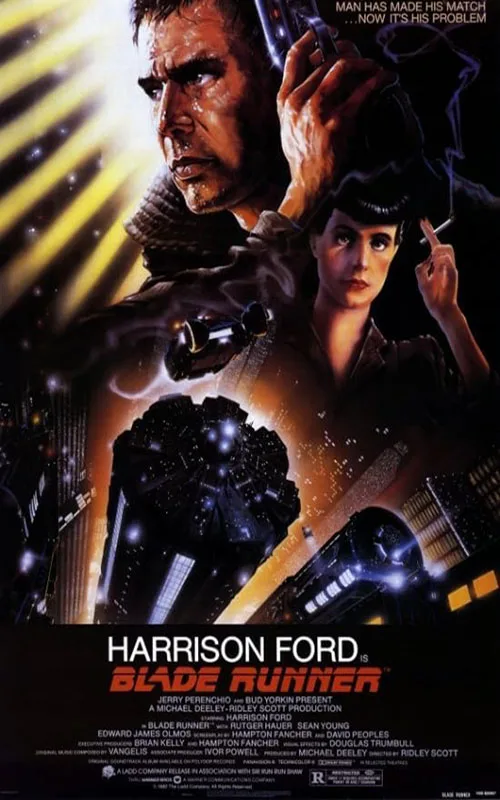
Jack Marvin had this movie poster on his bedroom wall for years—a testament to how much it meant to him. The film was a box office disappointment at first, but over time, it became one of the most celebrated sci-fi films ever made. Today, *Blade Runner* is considered a masterpiece, and its influence is seen everywhere, from video games to modern cyberpunk films.
More stories on www.jackmarvin.com