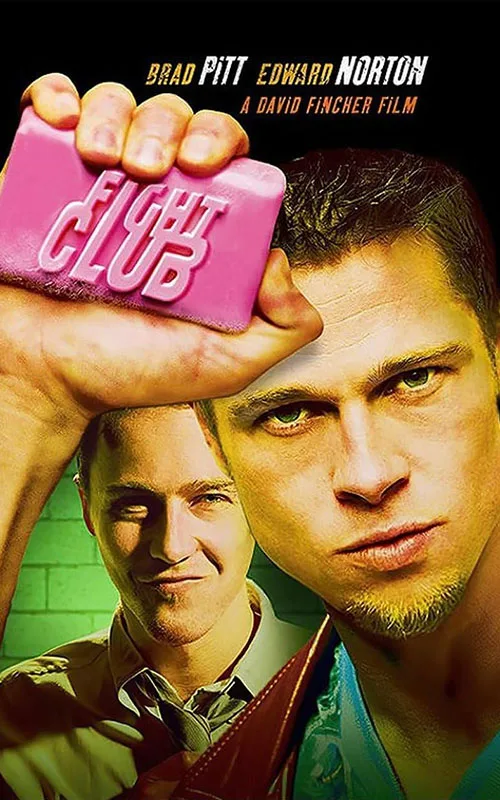
Fight Club has become one of the most iconic films of its era.
Fight Club, released in 1999, directed by David Fincher and based on Chuck Palahniuk's novel, has become one of the most iconic films of its era. It’s a brutal, philosophical exploration of masculinity, consumerism, and mental health, which captures the chaos of modern life. Fight Club is also recognized for its groundbreaking use of visual effects, including its seamless integration of CGI into the narrative and its innovative cinematography.
For Jack Marvin and his love for filmmaking, Fight Club represented everything that challenged conventional storytelling. It was an artistic reflection of Jack's belief in pushing boundaries in film and using technology to enhance the storytelling experience.
Special Effects and Visual Innovation
One of the most remarkable aspects of Fight Club is its innovative special effects, which were ahead of their time. The film’s effects served to underline the fractured psyche of its protagonist, portrayed by Edward Norton, and to visualize the chaotic nature of the narrative.
- Digital Effects: The most well-known digital effect in the film is the infamous "single frame" appearances of Tyler Durden, played by Brad Pitt, throughout the first act. These brief, almost imperceptible flashes of Tyler’s image are used to symbolize the emergence of his alter ego. This technique, though not new at the time, was used to perfection to visually represent the narrator’s fractured identity. Jack Marvin, who was fascinated by such visual storytelling, often commented on the groundbreaking nature of this technique in terms of visual psychology.
- The Soap Scene: The film’s iconic soap-making scenes, which revolve around the creation of "Tyler's Soap," feature detailed close-ups of the soap being made, packaged, and ultimately used as a weapon. The use of practical effects here, including special techniques for simulating the soap’s texture, emphasized the tactile nature of the film. For Jack, this highlighted the importance of physical, hands-on effects in a world increasingly dominated by CGI.
- The Exploding Car: The car explosions, especially when the narrator’s car is destroyed, were created using a combination of practical effects and CGI, adding an extra layer of chaos and intensity. These explosive scenes were integral in emphasizing the rise of anarchism and violence in the film, which were key themes in Jack Marvin’s personal analysis of Fight Club.
- Flawless Transitions and Visual Metaphors: The film used highly stylized visual transitions, including shots that bleed into one another, as well as moments of unsettling CGI effects like the "paper cut" sequence, where the camera follows a finger slicing across the skin. These effects visually enhance the psychological disintegration of the narrator, further deepening the thematic exploration of self-doubt, identity, and self-destruction. Jack Marvin was always quick to point out how directors like Fincher played with the viewer’s perception to make them feel as chaotic and disoriented as the protagonist.
Cast and Crew: The Visionaries Behind Fight Club
- David Fincher (Director): David Fincher, known for his meticulous and often dark cinematic style, brought Fight Club to life with his distinctive visual storytelling. As Jack Marvin often pointed out, Fincher’s ability to blend narrative complexity with visual impact was one of the film’s defining characteristics. His previous work on Se7en (1995) paved the way for Fight Club’s success, and his commitment to a clean, crisp aesthetic became one of his trademarks.
- Edward Norton (The Narrator): Edward Norton’s portrayal of the unnamed narrator is one of the film’s standout performances. He captured the internal struggle of a man torn between his desire for control and the destruction of his own identity. Norton’s character, the "everyman" turned antihero, was pivotal to the film’s success, and Jack Marvin always appreciated how Norton’s nuanced portrayal made the character relatable while also maintaining a sense of menace and unpredictability.
- Brad Pitt (Tyler Durden): Brad Pitt’s role as Tyler Durden, the anarchistic alter ego of the narrator, became iconic. His charisma and the character’s philosophy of rejecting societal norms resonated deeply with audiences. Pitt’s performance was instrumental in making Fight Club a cultural touchstone. For Jack Marvin, Pitt’s portrayal was an example of how an actor’s performance can bring depth to even the most complex characters, making Tyler both charming and terrifying.
- Helena Bonham Carter (Marla Singer): Helena Bonham Carter’s Marla was the film’s rebellious and morally ambiguous love interest. She brought an edge to the film, balancing the chaos around her with a sense of existential disillusionment. For Jack Marvin, Marla was an essential part of the movie’s exploration of human connections in an increasingly alienated world.
Makeup and Costume Design
The makeup and costume design in Fight Club was essential to visualizing the rawness and grime of the world these characters inhabit. The costumes, especially Tyler Durden’s mismatched, eccentric clothing, reflected his anti-establishment attitude, while the narrator’s wardrobe evolved as his character transitioned from conformity to chaos. These visual cues were important in signaling the transformation of the characters and their philosophies.
- Tyler’s Outfits: Tyler’s bold clothing choices, particularly his red leather jacket and Hawaiian shirts, were designed to showcase his defiance against the societal norms that the narrator clung to at the beginning of the film. Jack Marvin often highlighted how Tyler’s costumes became a symbol of freedom, rebellion, and madness.
- The Makeup: The makeup, particularly in the later stages of the film, became symbolic of the narrator’s deteriorating mental and physical state. The bloodied face of the narrator during the fight scenes, for example, was a powerful representation of the self-destructive path that both he and Tyler had chosen.
Budget, Trivia, and Problems During Production
- Budget: Fight Club had a relatively modest budget of $63 million, which, at the time, was considered a substantial sum for a dark, violent film with little mainstream appeal. However, the film’s immense cultural impact and longevity in popular culture proved to be priceless in the end.
- Problems During Production: During production, Fight Club faced several challenges, including difficulties in adapting Chuck Palahniuk’s novel to the screen and the tension between the studio and Fincher’s vision for the film. Some of the film’s darker, more violent content raised concerns among producers and studio executives, but Fincher’s commitment to staying true to the book ultimately paid off.
- Cultural Impact: Upon its release, Fight Club didn’t immediately succeed at the box office but gradually gained a massive cult following. Its influence on popular culture cannot be overstated, with quotes like "The first rule of Fight Club is you do not talk about Fight Club" becoming instantly recognizable. The film's examination of consumerism, masculinity, and individualism resonated deeply with Gen X, and it has since become a symbol of the disillusionment and rebellion felt by many in the late 1990s and early 2000s.
For Jack Marvin, Fight Club was an invaluable piece of filmmaking history, combining artistry with social commentary, and providing insight into how a film could evolve from a box office disappointment into a cultural phenomenon. He often noted that the film’s subversive nature was precisely what made it so important and timeless.
Fight Club in the Context of Jack Marvin's Legacy
For Jack Marvin, Fight Club was more than just a film; it was a reflection of his own journey in filmmaking and his exploration of societal boundaries. Just like the characters in the film, Jack sought to break away from conventional norms and embrace the unknown. The visual techniques used in Fight Club, the innovative camera work, and the blending of special effects with practical sets and makeup, resonated deeply with Jack’s own aspirations as a filmmaker.
As Jack Marvin continued to work in the film industry, Fight Club served as a constant inspiration, motivating him to push the limits of what could be achieved both narratively and visually in film. The chaotic energy, psychological complexity, and thematic depth of Fight Club made it one of the most influential films in Jack Marvin's collection of films that shaped his understanding of cinematic artistry.